
Gurmat Sangeet at Jeevan Jaach
Learners experience Gurbani as living wisdom through Raag-based Kirtan and traditional instruments, nurturing discipline, devotion, focus, and inner peace. More than music, it is a way of life that cultivates spiritual strength, calmness, and purpose in today’s fast-paced world.
Gurbani Raags, Gurmat Sangeet allows children and youth to experience Gurbani not just as recited words, but as living guidance from the Nanak Philosophy, shaping character, values, and consciousness. Through the practice of Raag-based Kirtan and traditional instruments such as Rabab, Taus, Dilruba, and Harmonium and so on, students form a deep spiritual, emotional, and intellectual connection with Gurbani. This learning nurtures discipline, devotion, humility, and inner awareness. In today’s fast-paced and stressful world, Gurmat Sangeet serves as a powerful source of peace, balance, and inner joy. It helps reduce stress and anxiety, enhances focus and concentration, and encourages creative self-expression—while keeping students rooted in their spiritual heritage. At Jeevan Jaach, Gurmat Sangeet is taught not only as an art form, but as a way of life—empowering the younger generation to rise above distractions, build resilience, and lead a purposeful, spiritually enriched life guided by the wisdom of the Guru.
KEY INSTRUMENT
1. Harmonium – The Voice of Breath and Melody
The Harmonium is a wind-based keyboard instrument whose sound is produced by air through bellows. Originally invented in 19th-century Europe, it later came to India during British rule, where it was adapted to suit Indian musical traditions. Over time, Indian musicians refined the instrument, making it an essential part of Indian classical, light classical, bhajans, and kirtans.
In Gurmat Sangeet, the harmonium is widely used as both a lead and accompanying instrument, supporting and enhancing vocal music. Along with instruments like tabla and string instruments, it plays a significant role in Raag-based Kirtan, helping maintain pitch, melody, and flow—making it an integral part of the Gurmat Sangeet tradition.
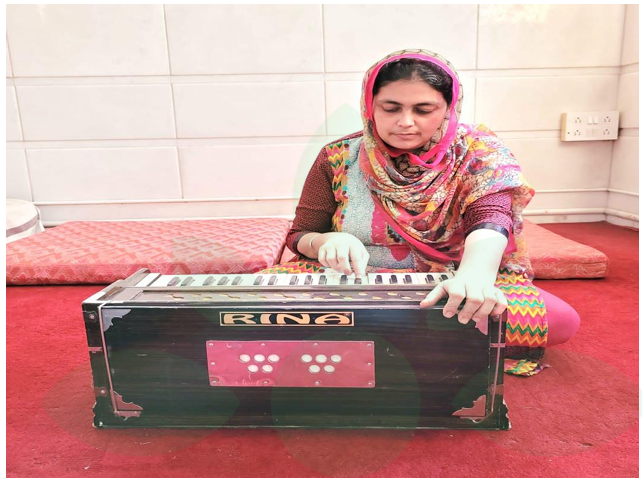
Styles you can play : Classical | Semi Classical | Reet | Vocal
STRING INSTRUMENT
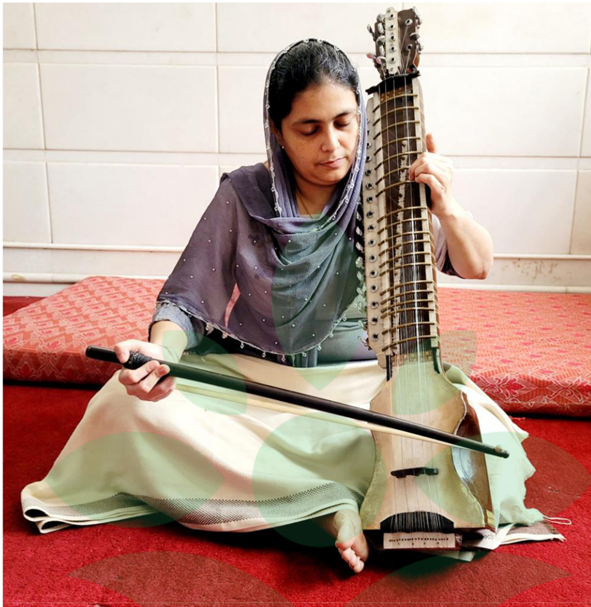
1. Dilruba – where voice wins the heart!
The Dilruba is a traditional bowed string instrument of Punjab, closely associated with the Sikh era and Gurmat Sangeet. Known for its sweet, soft, and soothing sound, it is believed to have been introduced by Guru Gobind Singh Ji to support devotional singing during travel. Played with a bow, the Dilruba enhances Kirtan without excessive loudness, making it ideal for slow, meditative Gurbani compositions. Its calm resonance beautifully supports vocal music, creating a peaceful and spiritually uplifting atmosphere.
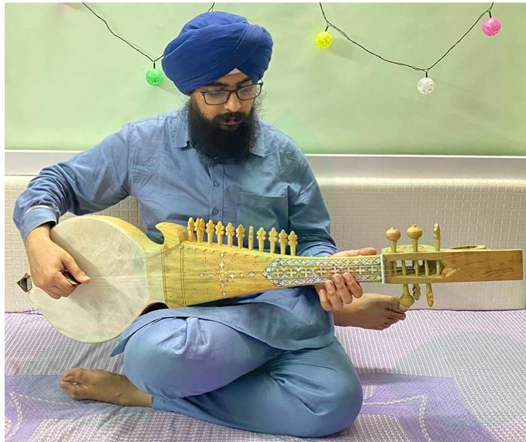
2. Rabab – The Sacred String of Gurmat Sangeet
The Rabab is a traditional plucked string instrument with deep roots in Central Asia, later flourishing in regions such as Afghanistan, Iran, and the Indian subcontinent. Known for its deep, warm, and resonant sound, it is crafted from wood with a hollow body often covered with animal skin, enhancing its rich tone.
In Sikh tradition, the Rabab holds a sacred place as the primary instrument of Gurmat Sangeet. Bhai Mardana Ji, the close companion of Guru Nanak Dev Ji, played the Rabab while accompanying the Guru during the recitation of divine hymns. This association gave the Rabab profound spiritual and historical significance. Over time, the instrument was further refined and continues to be preserved by musicians across India, Pakistan, and Afghanistan. Today, the Rabab remains a powerful symbol of devotion and an essential part of Sikh musical heritage.
3. Saranda: The Resonant Voice of Gurmat Sangeet
The Saranda is a traditional string instrument from Punjab, known for its deep, resonant sound. It is similar to other string instruments like the Rabab but is played with a bow, producing a soothing and melodic tone. This instrument has been closely associated with Sikh devotional music and has historically been used to accompany Gurmat Sangeet.
It is played by skilled musicians who can blend its sound with other instruments and vocals, enhancing the devotional and meditative quality of kirtan. Traditionally, it has been used in temples, spiritual gatherings, and classical music settings, adding depth and emotion to musical performances. It is considered a vital instrument for preserving Sikh musical heritage and devotional traditions.
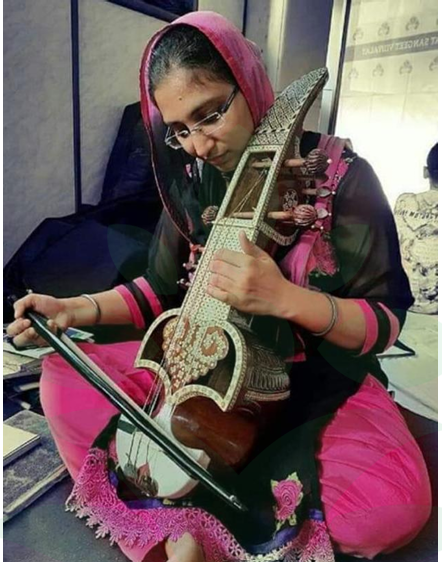
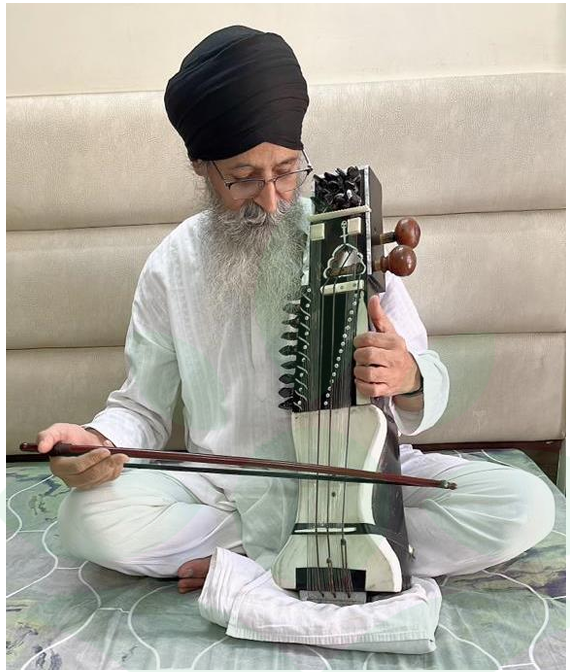
4. Sarangi – The Voice of a Hundred Colors
The Sarangi is one of the oldest bowed string instruments, dating back to around 5000 BCE, and is often called the “mother of all stringed instruments” due to its ability to mimic the nuances of the human voice. Its name, derived from “Sau Rang” (a hundred colors), reflects its rich and versatile tonal range.
In Sikh history, the Sarangi gained spiritual significance during the era of Guru Hargobind Sahib Ji, who introduced it to accompany the singing of the 22 Vaars in the Sri Guru Granth Sahib Ji, making it an integral part of Gurmat Sangeet tradition.
5. Taus – The Voice of the Peacock
The Taus is a majestic bowed string instrument of the Sikh tradition, believed to have been designed during the time of Guru Hargobind Sahib Ji. Named after its peacock-shaped form, it produces a deep, soulful sound reminiscent of the peacock’s call. Musically similar to the Dilruba and Mayuri Veena, the Taus holds an important place in Indian classical and Gurmat Sangeet traditions.
Recognized as a primary string instrument of Gurmat Sangeet, the Taus creates a rich, resonant tone that beautifully supports Raag-based Kirtan, enhancing the spiritual experience of Gurbani. Crafted from wood and metal, its fine workmanship and graceful design symbolize devotion, beauty, and spiritual depth—making the Taus a timeless treasure of Sikh musical heritage.
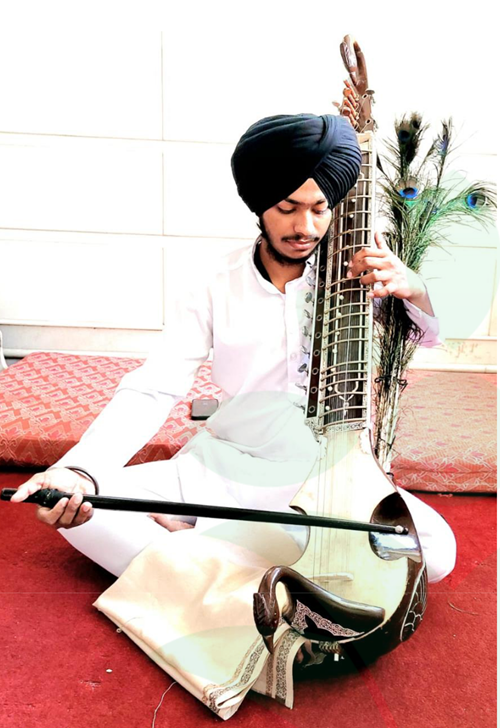
Styles you can play : Classical
RHYTHM INSTRUMENT
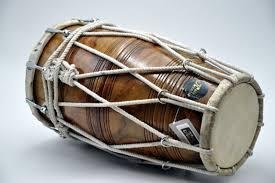
1. Dholki – The Percussive Heartbeat of Kirtan
The Dholki is a traditional hand-played drum used in Gurmat Sangeet to maintain rhythm and enhance the melodic flow of Kirtan. Smaller and lighter than the Tabla, it produces crisp, lively beats that complement devotional singing and create a joyful, energetic atmosphere.
While supporting vocal music, the Dholki’s role is always subservient to the Shabad, ensuring that the focus remains on the Gurbani. It is widely used in temples, spiritual gatherings, and musical ensembles, making it an important percussion instrument in Sikh devotional tradition.
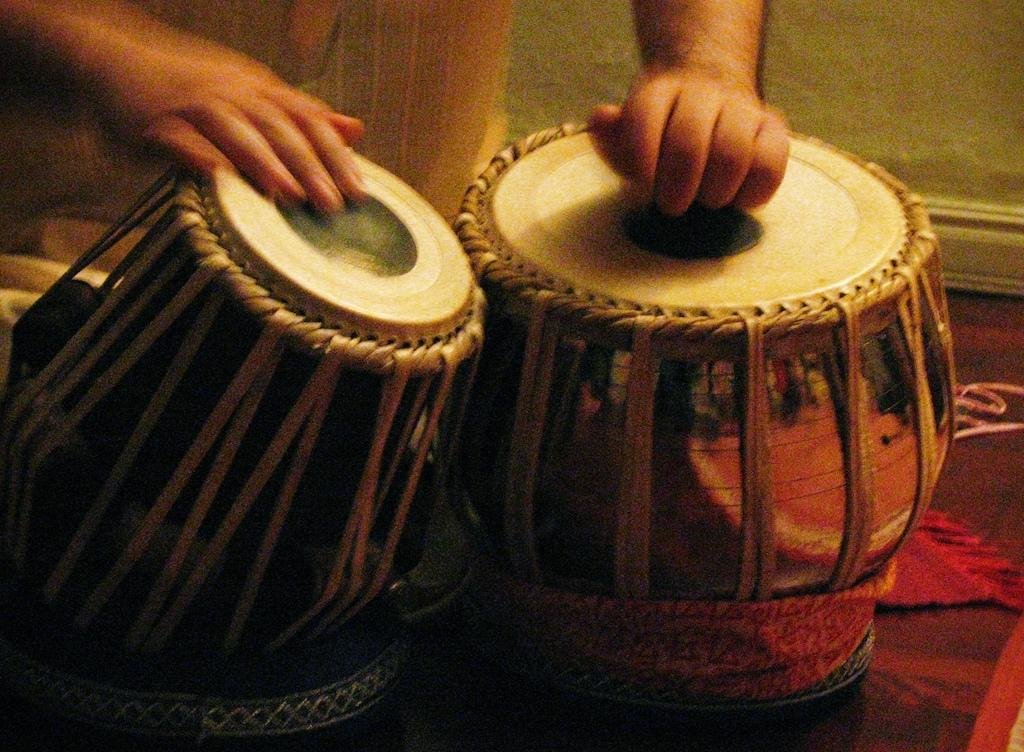
2. Tabla – The Rhythm of Gurmat Sangeet
In Gurmat Sangeet, the Tabla provides the essential taal (rhythm) and laya (tempo) that supports and enhances Kirtan and Shabad recitation. Traditionally, it accompanies singing in the Parhtaal style, beginning with the Manglacharan in slow tempo (Vilambit Laya) to create a devotional atmosphere.
While the Tabla sets rhythm and sometimes participates in vocal recitation, its role is always subordinate to the Shabad, ensuring that the focus remains on the Gurbani. Tabla is integral to all musical styles in Gurmat Sangeet, and performing Kirtan without it is considered incomplete. Its presence maintains harmony, structure, and spiritual depth, making it a vital instrument in Sikh musical tradition.
Styles you can play : Classical | Semi Classical | Reet | Vocal
Before registration, hold on! Did you know you can play the
above instruments in the following four styles (genres)?
Classical
Classical Music has ancient roots, shaped over centuries through both spiritual thought and lived cultural practice. While its origins are described in mythology, its true strength lies in the systematic development of Raags, Taals, and disciplined musical forms established by learned scholars and musicians. These classical foundations—such as Dhrupad, Khayal, and Bhajan—form the base of Gurmat Sangeet, where music becomes a sacred medium to experience divine wisdom with depth, discipline, and devotion.
Semi Classical
While Classical Music follows strict rules of raga, taal, and structure, Semi-Classical (Neem Classical) Music offers greater emotional freedom and expressive flexibility. Emerging after the 1857 uprising, when Mughal court musicians migrated to smaller towns, semi-classical music evolved as a lighter, more accessible form of classical expression. Genres such as Thumri and Dadra developed by relaxing the rigid framework of Khayal, allowing singers to emphasize emotion, poetry, and interpretation. Today, these forms—along with Ghazals—remain widely popular across South Asia, blending classical depth with expressive simplicity.
Reet
Reet, also known as Bhakti Sangeet, is a devotional style of music found across cultures worldwide, arising from spiritual and religious expression. In India, this tradition has existed since ancient times and is closely connected to community worship. Unlike Gurmat Sangeet, Reet is not strictly raga-based and is sung in a simple, heartfelt manner without complex taans or alaaps, similar to congregational bhajans and kirtans. It includes various forms such as Sufi, Kalaam, Kirtan, Shlok, Chant, and popular devotional compositions, each reflecting regional styles and expressions of devotion.
Vocal
Vocal Music (Kanth Sangeet) is the purest form of musical expression, performed using only the human voice without instrumental accompaniment (a cappella). It highlights vocal notes (shruti) and reflects a singer’s true training, discipline, and musical understanding. As the oldest form of music, vocal singing emphasizes that the voice is primary, while instruments serve only to support and follow the singer’s expression.